07.12.2025


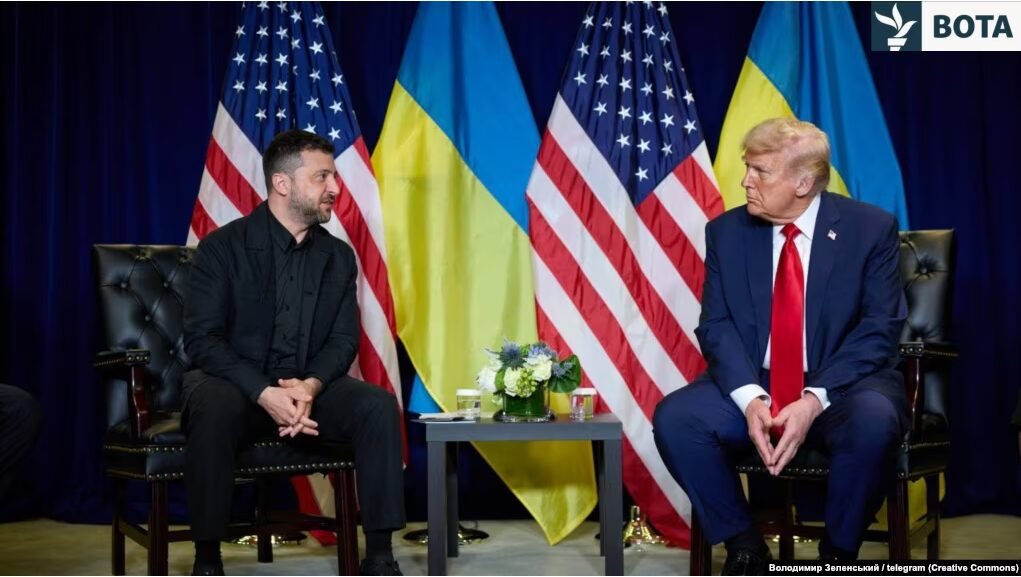

In a surprising reversal, U.S. President Donald Trump declared on September 23 that Ukraine could eventually regain all of its Russian-occupied territory with the help of Europe and NATO. The statement, posted on social media after his meeting with Ukrainian President Volodymyr Zelensky at the UN General Assembly in New York, marked a sharp contrast to earlier suggestions from Trump and his allies that Kyiv might need to concede land to Moscow as part of any peace deal.
Trump’s new tone comes months after he told Zelensky in a tense White House meeting that Ukraine “did not have the cards” to win the war. His recent claim that Kyiv is “in a position to prevail” has left analysts questioning whether the U.S. president is repositioning Washington’s policy—or simply adjusting rhetoric without committing to concrete measures.
The post fueled speculation: Will Trump now back away from pressuring Ukraine into concessions? Will sanctions remain central to U.S. strategy? And could his remarks shift calculations inside the Kremlin?
Trump wrote that Russian President Vladimir Putin was in “BIG economic trouble,” citing Moscow’s financial woes as a reason Ukraine could restore its sovereignty “with time, patience, and Europe’s financial support.” Yet he did not announce new sanctions, leading observers to wonder whether Washington is stepping back from additional economic pressure.
Only hours earlier at the UN, Trump had threatened “powerful new tariffs and sanctions” if Russia refused to engage in peace talks—but again stressed that European states must mirror U.S. actions for them to be effective.
For Kyiv, Trump’s latest comments are significant. They suggest that Washington may not pressure Ukraine into territorial concessions, a longstanding fear in Zelensky’s camp. But Trump also placed responsibility squarely on Europe and NATO, implying that the U.S. role could be limited to supplying weapons for allies to transfer to Ukraine.
“Clearly this is not a commitment to expanding U.S. military aid,” said Olga Oliker of the International Crisis Group. Analysts argue that unless Trump pledges additional Patriot batteries, advanced systems, or direct aid, his statement represents rhetorical support rather than a material shift.
As expected, Moscow dismissed the remarks. Kremlin spokesperson Dmitry Peskov argued that battlefield dynamics would worsen for Kyiv if it refused to negotiate, framing Trump’s optimism as unrealistic. Analysts added that Putin remains committed to subjugating Ukraine and unlikely to accept peace talks on terms that compromise Russian gains.
European leaders may cautiously welcome Trump’s rhetoric as an indication that Washington won’t obstruct their support for Kyiv. Still, many worry about the inconsistency of Trump’s positions. As Sam Greene of King’s College London noted, “If this really means he is prepared to see Ukraine end the war without compromising sovereignty, that’s important. But there is no guarantee he won’t shift again.”
Trump’s latest statements raise more questions than they answer. Is the U.S. pivoting toward firmer support for Ukraine’s territorial integrity, or is this a political maneuver that outsources responsibility to Europe? For now, the Kremlin appears unmoved, Ukraine remains cautious, and Europe braces for further uncertainty in Washington’s approach.