
07.12.2025


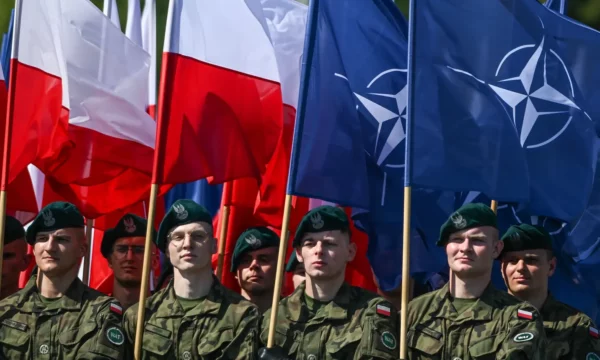

Poland’s ability to defend itself in the event of a large-scale Russian air assault has been called into question following remarks by Ukrainian President Volodymyr Zelensky. The comments came after 19 Russian drones entered Polish airspace, of which only four were intercepted.
“If you compare—Ukraine destroyed 700 out of 810 drones, while the Poles destroyed 4 out of 19—it is clear they cannot protect people if faced with a massive attack,” Zelensky said.
The incident and Zelensky’s stark comparison triggered debate about the actual strength of Poland’s armed forces. While Kyiv has faced near-daily barrages of drones and missiles since 2022, Warsaw has largely been shielded from such attacks due to its NATO membership. This makes the recent drone incursions all the more significant, raising questions about Poland’s air defenses and readiness.
Despite the criticism, Poland is widely regarded as one of Europe’s most capable militaries and a central pillar of NATO’s eastern flank. Since Russia’s full-scale invasion of Ukraine, Warsaw has ramped up defense spending to over 4% of GDP—one of the highest rates in the alliance.
Key elements of Poland’s military strength include:
A standing army of more than 170,000 active personnel, with plans to expand beyond 300,000 in coming years.
Acquisition of modern U.S. equipment, including F-35 fighter jets, HIMARS rocket systems, Abrams tanks, and Patriot air-defense batteries.
A robust territorial defense force of tens of thousands of reservists.
Even with this modernization, Poland’s air defense network remains limited compared to the scale of Russian missile and drone attacks. Systems like Patriot batteries and newly acquired South Korean K2 tanks and K9 howitzers strengthen deterrence, but defending against swarms of low-cost drones is a problem faced not only by Poland but by all NATO members.
Experts note that Poland’s geography—bordering both Ukraine and Belarus—makes it especially vulnerable to airspace violations and hybrid threats. The recent drone incident demonstrates the challenge of maintaining constant surveillance across such an extensive border.
While Zelensky’s criticism highlights gaps, analysts caution that Poland remains indispensable to NATO’s strategy. Beyond its own defense, Poland hosts significant U.S. and NATO deployments, including forward-positioned troops and missile defense installations. Its territory serves as the main logistical hub for delivering Western aid and weapons into Ukraine.
The controversy underscores the tension between public perception and military reality. Ukraine, hardened by two years of relentless war, has developed highly adaptive air defense tactics. Poland, by contrast, has not faced daily bombardments—yet it continues to expand and modernize at an unprecedented pace.
For many observers, the drone incident is less a reflection of Polish weakness than a reminder of how challenging it is to defend against modern asymmetric air threats. Still, as Zelensky’s remarks illustrate, Poland’s reputation as a reliable NATO bulwark is now under sharper scrutiny.