
07.12.2025


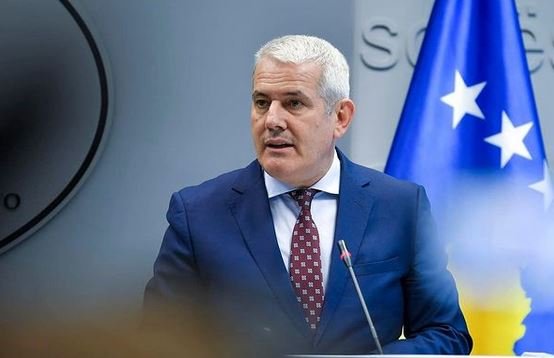

Kosovo’s Acting Minister of Internal Affairs, Xhelal Sveçla, has accused Serbia of violating Kosovo’s airspace through unauthorized drone flights. Speaking in an interview with KTV, he warned that such actions represent part of a broader pattern of threats from Belgrade against Prishtina.
“Look, we are continuously threatened by Serbia. Recently, I believe it’s already known that there have been unauthorized movements, or violations of our airspace, by drones which from time to time circulate and cross into our skies,” Sveçla said.
According to the minister, several incidents involving Serbian drones over Kosovo have been identified. However, he emphasized that there is no immediate cause for public alarm. “It has happened in several cases. We are investigating them professionally in cooperation with KFOR and with partner services. As soon as we have more concrete information, we will share it. For now, there is nothing that should cause concern among the public—Kosovo’s institutions are fully on duty.”
Sveçla linked these drone incidents to Serbia’s broader military posture in the region. He referred to recent Serbian military parades, describing them as a form of intimidation directed at Kosovo. “Such displays are inherently a threat to the Republic of Kosovo, especially since most of Serbia’s neighbors—Croatia, Montenegro, Albania, Bulgaria, and others—are members of NATO. They cannot realistically be threatened by Serbia. Potentially, only two countries remain vulnerable: Bosnia and Herzegovina, which faces political uncertainty and ongoing instability, and the Republic of Kosovo, which despite daily strengthening and successes, still confronts Serbia’s old hegemonist policies,” he explained.
The minister further suggested that Serbia seeks to exploit shifting global circumstances as a pretext for undermining Kosovo’s sovereignty. He underscored that while Kosovo is making steady progress in consolidating its statehood and building international partnerships, Serbia continues to apply strategies reminiscent of past nationalist ambitions.
Sveçla stressed that Kosovo is not facing these challenges alone. The ongoing investigations into drone activity are being carried out with the support of KFOR—the NATO-led peacekeeping mission in Kosovo—as well as other “partner services,” a phrase typically used to denote Western intelligence and security agencies. This coordination, he argued, is a demonstration of Kosovo’s commitment to professional handling of security concerns and its integration with international security frameworks.
Despite the potential seriousness of Serbian drone activity, Sveçla repeated his assurance that Kosovo citizens should not feel endangered at this stage. “All our institutions are in place and performing their duties. There is no reason for panic,” he noted. However, he made clear that the incidents serve as a reminder of Serbia’s confrontational stance and the persistent challenges Kosovo faces in securing its sovereignty.
Analysts suggest that if verified, the alleged drone flights represent not only a violation of Kosovo’s airspace but also a breach of international norms that risks further escalating tensions in the Western Balkans. They also highlight the continuing fragility of relations between Kosovo and Serbia, despite ongoing dialogue efforts facilitated by the European Union.
For now, Kosovo’s message is twofold: reassurance to its citizens that institutions are in control, and a warning to the international community that Serbia’s actions remain destabilizing.