07.12.2025



Moldova’s Pro-European Party Wins Parliamentary Elections: A Victory for Chișinău and Brussels
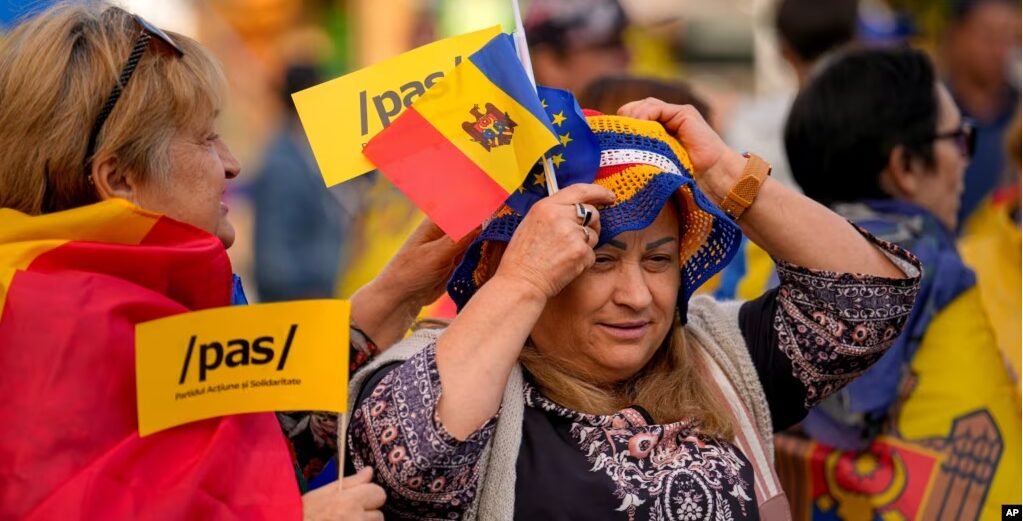
A woman waves both the Moldovan and EU flags during a pro-European rally organized by the ruling Action and Solidarity Party (PAS) in Chișinău on September 26, 2025, just days before the parliamentary elections.
Moldova’s pro-European Action and Solidarity Party (PAS), led by President Maia Sandu, has secured victory in the parliamentary elections, overcoming what observers described as a Kremlin-orchestrated disinformation campaign.
The vote was widely framed as a decisive choice between Brussels and Moscow. The European Union openly supported PAS, providing financial backing and imposing sanctions on pro-Russian politicians. Early projections suggest that PAS secured at least 55 of the 101 seats in parliament—an outcome far stronger than expected, as pre-election polls predicted a tight race.
For the EU, this result represents not only a political success but also a strategic safeguard on its eastern flank, at a time when Russia continues to test Western resolve in Ukraine.
This electoral victory is seen as a major step forward in Moldova’s path toward EU membership. Negotiations could accelerate, potentially aligning Moldova’s accession timeline with the EU’s 2029 parliamentary cycle.
“This pro-European victory in Moldova is a lesson for all of Europe on how to defend against Russian interference,” said Siegfried Mureșan, Vice-President of the European People’s Party. “Moldova remains firmly on the European path. Good news for the Moldovan people, and good news for Europe.”
For Sandu, this marks a triple political success: reelection as president less than a year ago, a narrow win in the EU membership referendum, and now a commanding parliamentary majority.
In the weeks leading up to the vote, Moscow spread claims that NATO was preparing to “invade” Moldova, while Moldovan authorities accused Russia of funneling hundreds of millions of euros to destabilize the country. Several pro-Russian parties were banned from running, following allegations of vote-buying, illegal financing, and money laundering.
The EU, usually cautious in foreign elections, made little effort to hide its preference for PAS. Brussels pledged €1.9 billion in development funding earlier this year and imposed sanctions on pro-Russian politicians, while several European leaders visited Chișinău to express support.
Perhaps the most symbolic blow to the Kremlin came just days before the election, when Greek authorities extradited oligarch Vlad Plahotniuc, long accused of corruption and linked to the infamous “billion-dollar bank fraud.” His arrival in handcuffs in Chișinău boosted Sandu’s anti-corruption credentials at a decisive moment.
Moldova’s victory is also a win for Ukraine. Surrounded by war on its eastern border, Kyiv cannot afford another hostile neighbor to the west. The result means Moldova may now become the “locomotive” pulling Ukraine toward the EU, even as Hungary continues to block Kyiv’s accession path.
For Brussels, ensuring Moldova stays on the European track was too important to risk losing. With the EU seeking to expand both in the Western Balkans and to the east before 2029, Chișinău now looks set to fast-track negotiations on all 33 accession chapters.
At least for now, Europe can breathe a sigh of relief: Moldova has resisted falling under Kremlin influence, and its European dream remains alive./ REL