07.12.2025


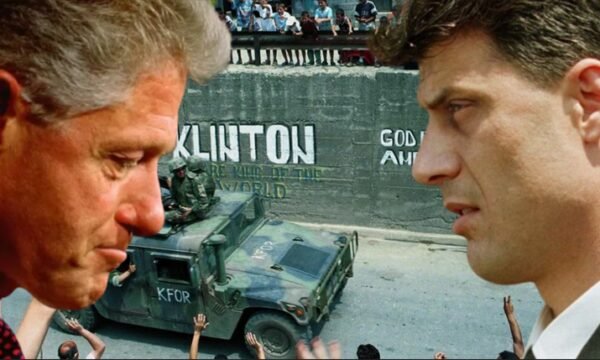

On June 20, 1999, just days after Serbian forces had withdrawn from Kosovo and NATO’s bombing campaign had ended, U.S. President Bill Clinton called Hashim Thaçi, then the political leader of the Kosovo Liberation Army (KLA/UCK). The call, placed from Clinton’s hotel room in Cologne, Germany during a G8 summit, marked an extraordinary moment: the beginning of Kosovo’s post-war transition from armed struggle to self-governance.
The presidential transcript of their 10-minute conversation reveals both the optimism and the challenges of that pivotal time. Clinton congratulated Thaçi on signing the demilitarization agreement that transformed the KLA into a civilian political and security structure, while Thaçi emphasized that the success was mutual—shared between Kosovo’s fighters and their international supporters.
“Congratulations on signing the agreement on demilitarization and transformation of the KLA,” Clinton said, noting that it coincided with the complete withdrawal of Serbian forces from Kosovo that same day. “I’m very pleased this happened. It’s a very important day for Kosovo.”
The U.S. president promised full cooperation in ensuring security, establishing a local police force, and developing “genuine self-government for the people of Kosovo.” He added that reversing the ethnic cleansing campaign was a profound achievement.
Thaçi responded by stressing compromise and dedication to peace. “This is also your success,” he told Clinton. “We guarantee that we will respect human rights and the rights of minorities in Kosovo. We are committed to bringing freedom, peace, and democracy for all ethnic groups. We will also work toward a free and open economy.”
He described the next “battle” as the return of refugees, reconstruction, building civil society, and holding free, pluralist elections.
Clinton highlighted Thaçi’s pledge to protect minorities as a decisive step. “Your statement on respecting human rights and the rights of minorities is very important. After the suffering of the people of Kosovo, your leadership on these issues shows everyone that our cause is just,” Clinton remarked.
He contrasted Thaçi’s stance with the brutality of Slobodan Milosevic, declaring: “We will have a good future. I look forward to meeting you and I admire your leadership.”
The conversation ended on a note of gratitude and mutual encouragement. “The new battle now is to bring back the refugees, rebuild, create a civil society, and hold free elections,” Thaçi said. Clinton, in turn, thanked him and closed with “Goodbye.”
The phone call underscored the strategic partnership between Kosovo’s leadership and the United States at the end of the 1999 conflict. For Clinton, it was both a personal and political victory: NATO’s intervention had forced Milosevic’s forces out of Kosovo without deploying ground troops. For Thaçi and the KLA, the call symbolized international recognition and the first steps toward building Kosovo’s institutions.
The transcript also illustrates the early commitments—human rights, democracy, minority protections—that would become central to Kosovo’s political narrative in the years ahead. More than two decades later, the conversation resonates as a moment when optimism for Kosovo’s future ran high, and when the foundations for its eventual declaration of independence in 2008 were being laid.