07.12.2025


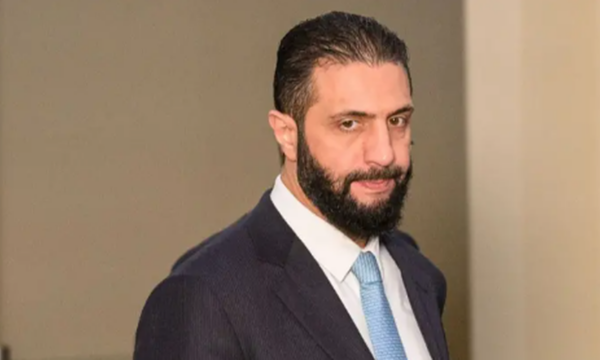

Soon, Syria’s interim president Ahmed al-Sharaa will make his debut at the United Nations General Assembly (UNGA)—a moment few could have imagined given his turbulent past.
According to a BBC correspondent in Damascus, al-Sharaa’s life story could be dismissed by Hollywood as too implausible: once a veteran Islamist fighter with a $10 million bounty on his head, today he is stepping onto the world stage as the recognized leader of his country.
Al-Sharaa was formerly associated with al-Qaeda networks and fought against U.S. forces in Iraq, where he was eventually imprisoned. Known during those years by the nom de guerre Abu Mohammed al-Jolani, he built his reputation in militant circles before reemerging in Syria’s conflict.
His trajectory changed dramatically in December last year, when his rebel coalition achieved a decisive victory in Damascus, effectively ending the decades-long rule of Bashar al-Assad. That breakthrough reshaped Syria’s political map and opened the way for al-Sharaa to assume interim leadership.
The transformation was swift. Shedding his camouflage fatigues, al-Sharaa adopted tailored suits and relinquished his war alias, rebranding himself as a statesman. Within months, he transitioned from battlefield commander to provisional president—an evolution that has shocked both allies and adversaries.
This week, in an almost surreal scene, he sat down for an interview with David Petraeus, the former director of the CIA and commander of U.S. forces in Iraq. Petraeus, who once fought on the opposite side of al-Sharaa’s insurgency, referred to himself as “a fan” and even asked the Syrian leader whether he was getting enough sleep. The exchange captured the paradoxes of al-Sharaa’s political journey.
While his ascent has been met with enthusiasm by some, particularly among Syrians who see him as a symbol of Assad’s downfall, others remain wary. Critics highlight his past affiliations and question whether his reinvention as a reformist leader can be trusted. The upcoming address at the UN will therefore serve as a critical test of credibility—not just for al-Sharaa personally but for Syria’s fragile new political order.
Diplomats note that the reception he receives in New York could influence Syria’s prospects for international support, reconstruction aid, and reintegration into the global community. His appearance signals both opportunity and risk: a chance to present a new vision of Syria, but also a reminder of the shadows cast by his past.
Observers believe more “surreal moments” may follow as al-Sharaa navigates global politics. His story embodies the contradictions of a region where yesterday’s insurgent can become today’s head of state. For Syrians exhausted by years of war, his leadership offers both hope and uncertainty—hope for stability after Assad, but uncertainty about whether the new president can truly deliver reconciliation and governance after such a controversial past.
As al-Sharaa prepares to stand before the UN General Assembly, the world will be watching closely: can a man once pursued as a terrorist now redefine himself as a legitimate statesman? The answer may shape not only Syria’s future but also the broader narrative of conflict and redemption in the Middle East.